Enter the access code shared with you.

Investor Briefing · 2026

Psychedelic care will be one of the largest categories in human health.

Althea already powers it.

Three-quarters of the legal psilocybin sessions in America already run on Althea's software. We have built the provider network, the consumer brand, and the dataset that decide who wins this category as it scales.

At a Glance
The category
A category that has been building for a decade is finally inflecting. FDA approvals, state programs, and a cultural turn that is already well underway. Tens of millions of people are about to look for legal access, and the next five years are the unlock.
Our position
This category needs three things to scale: software that runs the practices, a marketplace that connects participants and providers, and a brand people trust. Althea has all three. 75% of regulated psilocybin in America already runs on our software, and Tricycle Day — the most engaged audience in psychedelics — is our entire top of funnel.
Why now
First FDA-approved psychedelic medicines are roughly six months out. Their narrow labels will not absorb the demand they activate. We are at a cultural tipping point. People will need a legal place to go. State programs are it, and we run the software underneath them.
The proof
In the real world, inside regulated programs, psilocybin delivers strong efficacy and a favorable safety profile. Our forthcoming paper with the University of Colorado is the largest real-world evidence study of regulated psilocybin to date: 2,752 participants, with outcomes that match or exceed published clinical trials. The clinical case was already strong. This is the proof it holds outside the trial. See the evidence →
The raise
$5.5M to build the brand, the software, and the marketplace that will dominate this category as it inflects. We have been deliberately capital-efficient. The window to be the default in the next wave is open now.
Section ii

Why now.

Three forces are converging, making this category inevitable.

i. Cultural. Advocates from every corner of American life.

The demand is not only about mental health. It runs downstream of a deeper set of pressures: a spiritual crisis, an epidemic of loneliness, the disorientation of a society that will have to reinvent itself around what AI is doing to work and meaning, political instability, climate anxiety. These are the forces moving underneath the culture, and they are pushing people toward the kind of healing psychedelics offer. Psychedelic care is not only for the sick. It is for the well, for anyone trying to stay whole in a moment that asks so much of being human.

Public figures across every part of American culture have already normalized this conversation, from athletes and veterans to Silicon Valley and mainstream wellness. The stigma is already breaking. Mainstream Americans are not waiting for permission to be curious; they are waiting for legal access.

Public figures who have spoken openly about psychedelics
A cross-section of the public figures who have spoken openly about psychedelic use and its therapeutic potential.
ii. Medical. The clinical evidence is deep, and it now translates to the real world.

Johns Hopkins, NYU, and Imperial College London have spent over a decade producing rigorous clinical trials showing psilocybin works for depression, anxiety, addiction, and end-of-life distress. The clinical efficacy is no longer the open question. The remaining question has been whether results from controlled settings hold when the medicine is delivered in the real world, by trained facilitators, to participants outside a trial. Our paper with the University of Colorado answers it. 2,752 participants across Oregon and Colorado, with outcomes that match or exceed published trial benchmarks. Read the real-world evidence analysis →

Published Phase 3 trials Althea real-world
20% 40% 60% 37% 42% 58% Response ≥50% improvement 25% 68% Remission below clinical threshold COMPASS '22 Usona '23 Althea Usona '23 Althea
Real-world depression outcomes (PHQ-9, N=133) against published Phase 3 trials: COMPASS COMP360 (Goodwin, NEJM 2022) and Usona PSIL201 (Raison, JAMA 2023). Trials use MADRS; the instruments are not directly interchangeable, but the magnitude of improvement is notable given Althea's single-session, full-service protocol.
iii. Political. The institutions are catching up, and they will not satisfy the demand they create.

Oregon and Colorado are live. New Mexico goes live January 1, 2027. Massachusetts, Washington, and California are in motion. The April 2026 executive order gave Republican legislators cover to back psychedelic programs, removing the largest historical barrier to expansion. First FDA approvals are roughly six months out: Compass, Cybin, MindMed, Usona, and Transcend all in late-stage development.

But the approvals will be narrowly indicated. In our own dataset of 2,752 participants, FDA labels would cover roughly 28% of the people already showing up. The other 72% are coming for reasons no pharmaceutical label will ever cover, and 45% are already traveling out of their home state to get legal access. FDA approval does not absorb this demand. It activates it. Tens of millions of newly educated consumers will look for legal access. State programs are the only legal place for them to go, and Althea runs the software underneath the state programs.

President Trump signing the executive order on psychedelic treatments
President Trump signs the executive order accelerating psychedelic treatments. April 18, 2026.
Section iii

What Althea is.

The top of the funnel is saturated and the bottom works once someone finds a provider. The missing middle, how a person actually does this, with whom, and at what cost, has had no owner. Althea is that missing middle. We run regulated psychedelic care in America: providers run their practices on our software, document every session in our dataset, and increasingly meet new participants through our marketplace.

be.withalthea.com
The live Althea marketplace where participants find and book regulated providers
The live marketplace, where participants find and book regulated providers. View it live →
For providers
Facilitators and centers run their practice on Althea. Scheduling, intake, session documentation, state-compliant reporting, and payments. The workflow software that turns a regulated practice from a compliance burden into a viable business. Providers pay nothing for the software; we monetize through payment processing on the volume they run through it (4–6.5% on session fees).
For participants
People discover psychedelic care through Tricycle Day, our consumer media property and the most-read newsletter in the category. From the newsletter and our directory, they book a session with a credentialed provider, complete intake, and pay through a single flow. Althea takes a 15% marketplace fee on every booking we source.
For researchers and regulators
Every session documented on Althea improves the category's only real-world dataset. 2,752 participants are already studied in our paper with the University of Colorado. We are in active discussions with several top research universities about future studies that run on the workflow we already operate, and we have begun generating revenue from clinical-trial recruitment by routing pre-qualified participants from our consumer reach into ongoing trials. Regulators cite our outcomes in legislative deliberation. Pharma needs our data to expand FDA labels. Insurers need it to justify coverage.
The audience asset
Tricycle Day
Tricycle Day, our consumer media property, has 95,000 subscribers and a 40 percent open rate across three sends a week. It is the most engaged psychedelic-curious audience in the country and the entire top of our funnel. It is also the marketplace's only distribution channel today, which is why the funnel converts even before we spend a dollar to acquire.
Why we win

Our traction is not marketplace revenue yet. It is the set of assets that decide who wins when this category inflects, and we hold all of them today.

i.

Supply lock-in

Dominant provider share in regulated psilocybin. Providers in compliance-heavy programs do not switch software casually; our documentation is woven into how they operate. We built this network during the only window when the market was small enough to onboard providers one at a time. That window is closing.

ii.

Real-world evidence

Every session documented on Althea deepens the category's only real-world dataset. It has already produced the largest real-world evidence study of regulated psilocybin to date. Pharma will need these data to expand labels, regulators to write rules, insurers to justify coverage. Althea is the default data partner because we run the workflow. See the evidence →

iii.

Consumer trust

Trust is the rate-limiting input on the demand side. People do not buy psychedelic care from strangers. Tricycle Day has been building that trust for years, and it converts.

iv.

Network effects

More providers attract more participants. More participants attract more providers. More sessions improve our matching, our data, and our credibility. Althea is the only company in this space where all three sides of the flywheel are spinning.

These compound. Compliance software earned the provider network. The network produced the dataset. The dataset became a paper that validates the category. The paper strengthens the case for regulatory expansion, which grows the market Althea already leads. Not a research project. A flywheel.

How we earned 75% market share

Three reasons we are the default.

i.

We built it when no one else would.

When Althea went live in Oregon in October 2024, facilitators were managing the new program on spreadsheets and home-grown systems. We earned the switch by being the only purpose-built option. By the time Colorado launched in summer 2025, we were the de facto solution from day one.

ii.

The network compounds through how the workforce moves.

Facilitators move between centers and take their workflow with them. We have onboarded as many centers because their facilitators insisted on Althea as facilitators because their centers required it. That bidirectional pull is what produces a centralized platform in a market of small, independent operators. The compliance burden is too specific for any one of them to solve alone. A shared platform is the only durable answer, and we are it.

iii.

We are the incumbent of the first wave.

New entrants now have to displace an incumbent that already runs the workflow, holds the data, and owns the provider relationships. The category will expand. Our position as the default in the first wave is the foundation we expand from.

Where we stand

What is proven, and what is early.

Proven today

Supply: dominant provider share. Data: the category's largest outcomes dataset. Audience: the most engaged consumer brand in the space. Payments: live rails, growing volume. These are built, defensible, and ours.

Still early

Marketplace conversion and client lifetime value. The marketplace launched in April and is running on almost nothing. We are learning what converts before we spend against it. This is the high-upside bet the round is designed to accelerate, not the bet the round is designed to start.

How we make money.

Two scalable monetization layers run on top of the provider network, with two existing revenue streams that prove business diversity from day one.

~$62K
Total GMV in May, up 4.2× since January
Layer one
Payments
4 to 6.5% on volume

Providers process transactions through Althea. The vertical SaaS layer of the business, working and growing. We have secured payment processors comfortable with the model: the rails support a licensed, regulated therapeutic service, not the substance itself.

Payments GMV · last five months
$14.7K
$8.6K
$18.9K
$23.1K
$52.2K
Jan
Feb
Mar
Apr
May
3.6×
Payments GMV growth, Jan → May
Layer two
Marketplace
15% take rate on session fees

We source participants to providers. Launched in April on zero paid spend, distributed only through Tricycle Day. The funnel is live and routing. This is the engine the round accelerates, not the engine it starts.

Marketplace GMV · since launch
$0.8K
$10K
Apr
May
$10K
Marketplace GMV in May
15 / 67
Bookings confirmed since launch · 22%
The first half of June has already matched all of May's marketplace volume, on zero paid spend and Tricycle Day distribution alone. The funnel is not just filling; it is converting fast.
Current Revenue · Not Part of Forward Strategy
~$200K
Tricycle Day ad sales
Annual run rate from editorial sponsorships. As the marketplace scales, we expect to convert this audience to bookings rather than continue to monetize through ads.
~$3.3K avg/mo
Provider directory subscriptions
Average monthly revenue from facilitator directory listings, January to May. A small line we expect to sunset as marketplace participation becomes the primary provider relationship.
Section iv

The three acts.

State programs today. Spillover demand in 18-36 months. The category itself within five years. Each act expands the market. Each is one Althea is structurally positioned to win.

Act one

Own the state programs.

Now → 18 months

Participants have grown at 14% compound monthly over the past five months as Colorado came online and our marketplace launched. Underwriting forward growth at a more conservative 8-12% monthly, with New Mexico online and one to two additional states added, the addressable market reaches significant scale. Althea takes a meaningful share because we are already the de facto solution for state markets.

$70–100M
Addressable session volume, 18 mo.
Act two

Capture the FDA spillover.

6 → 36 months

The first FDA approval is roughly six months out. Pharma educates the consumer base and stigma collapses. Approvals will not absorb the demand they create: our data show 72% of participants are coming for reasons outside what FDA-approved labels will cover. Althea is positioned to capture that demand and route it appropriately — to FDA-approved medicines for those who fit, to state programs for the rest, and to play in both.

$500M+
Annual addressable, 3 yr. post-approval
Act three

Whatever this market becomes

3 → 5+ years

A federal regulatory framework modeled on state programs is one possibility. Vertical integration into provider services to serve the FDA-approved market is another. Expansion into ketamine, international retreats, and the next regulated compounds is another. Each of these paths is open to us because the platform we have built absorbs every modality the market produces.

Optionality
We are not betting on a single outcome
Section v

What has to be true.

For Althea to become a venture-scale outcome, a set of assumptions must hold.

i.

Consumer demand for psychedelic care continues to grow as stigma falls.

Status
The cultural shift is already underway and self-reinforcing. Advocacy spans every axis of American culture: athletes, entertainment, royalty, Silicon Valley, the veterans community, the recovery community, wellness. Bipartisan political support is no longer notable.
If it slips
This is the assumption most resilient to failure. The shift is broad-based and predates any specific catalyst. Partial reversal would slow demand growth without eliminating it.
ii.

Regulatory expansion continues across at least one of three paths.

Status
Three independent paths to regulatory expansion, any of which is sufficient. The bet is that at least one continues, not that all three do.
FDA approvals
Following the April 2026 executive order, Compass Pathways, Usona Institute, and Transcend Therapeutics hold Fast Track designation. Breakthrough Therapy designation is held by Compass, Cybin, and MindMed. Multiple shots on goal in the next 24 months. Live tracker: Psychedelic Alpha drug development tracker.
State programs
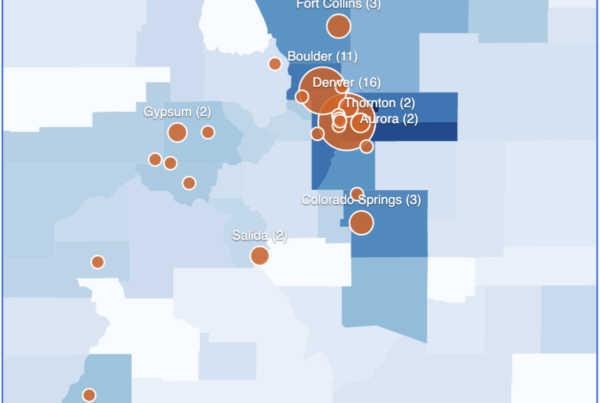
The thesis needs state-regulated access to keep proliferating and stay fragmented. Both hold. Oregon and Colorado are live; New Mexico, the first legislature-created program, launches January 2027. Independent trackers rate eleven more states high-likelihood for reform, and more than thirty states have now moved on research or study legislation, a wave the April 2026 federal executive order accelerated. FDA approval builds a narrow prescription rail over years; state programs serve the far broader supervised-access demand that exists today. No single operator or state will consolidate this market inside five years, and that fragmentation is the gap an infrastructure and matching layer fills. Live policy tracker: Psychedelic Alpha state laws tracker.
US map showing states with live psychedelic access programs, high-likelihood reform states, and states with research or study legislation
Spillover
FDA labels will be narrowly indicated. In our study population they would cover roughly 28% of participants; the rest sought psilocybin for reasons no pharmaceutical label will cover. Approval does not absorb that demand, it activates it: it breaks stigma, educates the consumer, and sends newly motivated people looking for legal access that only state programs provide. See the spillover data →
Federal framework
A federal regulatory program modeled on the state programs is a realistic five-year scenario.
If all three slip
Demand is less constrained than supply. 45% of participants in our study traveled from out of state for legal access, with all 50 states represented. Slower expansion concentrates volume in destination markets where Althea already dominates.
iii.

Althea maintains majority provider share as the market expands.

Status
75% provider share in regulated psilocybin today. Our compliance and documentation software is woven into how regulated providers operate. Switching costs are high and rising as our dataset deepens. The supply-side network was built during the only window when the regulated market was small enough to onboard providers one at a time. That window is closing.
Why we hold it
First-mover advantage in compliance software is structural in regulated markets. Providers do not switch casually because the documentation requirements are too specific and the cost of getting compliance wrong is too high. As new modalities enter our addressable market (ketamine, future compounds), our existing provider relationships are the natural distribution channel.
iv.

The marketplace converts intent into bookings at venture-scale efficiency, and the take rate holds.

Status
Marketplace is live and converting. 67 booking requests since the April launch, 15 confirmed, on zero paid spend and Tricycle Day distribution alone. The supply network exists. The consumer brand exists. The open question now is the unit economics of paid acquisition at scale.
Why it works
We have the most engaged psychedelic-curious audience in the country through Tricycle Day, the only credible provider directory on the supply side, and a real-world evidence dataset that lets us match participants to providers more precisely than any competitor could. The structural ingredients for marketplace conversion are all in our hands.
Why DTC doesn't win this
The obvious investor question is whether Hims, Ro, or a GLP-1-style direct-to-consumer brand will eat this category. They cannot. Psilocybin is a Schedule I substance under federal law. It cannot be mailed. It cannot be sold over a telehealth visit. Every legal session requires a trained facilitator, a licensed setting, and state-mandated documentation. The substance has to be served, not delivered. That regulatory shape is what makes a software-and-network company like Althea the natural winner, and what prevents the consumer health brands optimized for mail-order pharmacy from porting their playbook over. When federal legalization eventually comes, our provider network is the supply that consumer brands will need to partner with, not compete against.
Take rate
15% today, structurally defended by comparables. Specialty pharmacy comparables run 8-15%. Telehealth marketplaces run 10-20%. Session-based wellness marketplaces (Mindbody, ClassPass) run 15-30%. Provider willingness to pay for sourced demand is high because the alternative is paying for their own marketing.
v.

Client lifetime value compounds across re-engagement and adjacent offerings.

Status
Current baseline is unmanaged. 15.9% return rate and 1.29 sessions per client across 170 documented clients. Forward model targets 25-30% return rate within the marketplace-managed cohort within 24 months. Aggressive but supported by analogous categories where active engagement produces measurable lifetime value lift. Read the full LTV analysis →
Active management
Active management requires three things: visibility into who is likely to return, an engagement infrastructure to surface relevant next steps, and trust with the participant. We have all three. Our cohort data already segments returners; Tricycle Day is the highest-trust touchpoint in the category; and the marketplace is the routing layer.
Adjacent offerings
The journey itself is acute; the work continues for months after. There is real, underserved appetite for what comes next — integration coaching, community, retreats, microdose protocols, learning programs, longitudinal care. We do not know yet which of these we will build, partner on, or package, but the participants are already in our funnel and the brand permission is ours. Each additional offering raises lifetime value across every client we already have.
How we read these bets

Two are bets on directions the market is already moving. Three are bets on Althea's structural position to win. The single most consequential assumption is bet four, marketplace conversion at scale. Every dollar of this raise is allocated against the systems that make that conversion repeatable and the network that makes it defensible.

Section vi

Comparable outcomes.

Althea is the consumer health brand of psychedelic care, with a marketplace underneath. Three companies in adjacent categories have built this same shape and produced venture-scale outcomes.

Hims & Hers
$5.5B market cap · public

Consumer brand on top of healthcare commerce produces a multi-billion dollar public outcome. Brand trust converts to repeat purchase at scale. The clearest precedent for the Tricycle Day to Althea funnel.

Ro
$7B peak · private

DTC healthcare brand that owns the care journey, not just the transaction. The unit of value is the relationship. Structurally closer to Althea than Hims because the patient is recurring, not transactional.

Lyra Health
$5.58B · private

Behavioral health infrastructure with outcomes data clears at venture scale. Provider matching plus measured outcomes is a defensible moat in the same therapeutic neighborhood as Althea.

What this implies for Althea

Three companies in adjacent categories. Each one built a consumer health brand on top of provider commerce and produced a venture-scale outcome. None of them had a category as structurally favorable as ours: regulated supply that cannot be commoditized by mail-order, demand that is about to inflect, and a brand asset (Tricycle Day) that the others had to spend hundreds of millions of dollars to manufacture. We hold those control points before the category inflects. The therapeutic category we operate in is genuinely new. The business shape is not.

Section vii

The team.

A healthcare infrastructure operator who has done this once before, a category-defining consumer brand founder, a long-tenured CTO, and the operational backbone that makes the network function.

Niko Skievaski
Niko Skievaski
Co-founder & CEO

Co-founder & President of Redox, the leading healthcare data platform serving most major US health systems. Grew to 300 employees and $95M raised. Previously on the CTO's strategy team at Epic.

LinkedIn
Andrew Conley
Andrew Conley
Co-founder & COO

Scaled Nordic's healthcare managed services from 5 to 300 people and $2M+ in monthly recurring revenue, overseeing a team of 100+. Co-founder of 100state. Previously a project manager at Epic.

LinkedIn
Henry Winslow
Henry Winslow
President

Founded Tricycle Day. Led product launches in CNS specialty pharma and led marketing at Trippin' Ape Tribe, pharma rigor and consumer brand intuition in the same operator. 2018 World Yoga Asana Champion.

LinkedIn
TC Tobin-Campbell
TC Tobin-Campbell
CTO

Founding engineer at Redox, where he built the infrastructure that scales to billions of messages per day and doubled the engineering team as Head of Engineering. Previously a technical manager at Epic.

LinkedIn
Research Advisor
Scott Thompson
Scott Thompson, PhD
CU School of Medicine

Professor of Psychiatry, CU School of Medicine. Director of the Psychedelic Public Policy Partnership. PI on Althea's outcomes research.

LinkedIn
Section viii

The raise.

$5.5M to build the brand, the software, and the marketplace that will dominate this category as it inflects. We have the assets. The market is turning on. This is the round that funds the build.

Althea has raised $2.5M to date from Boulder Ventures, Matchstick Ventures, and Break Trail Ventures. That capital built the compliance platform that earned us the provider network we lead today and brought Tricycle Day into the company, the largest newsletter in the category. The combination of supply and audience is what made the marketplace possible. The next round is the first one structured to scale.

$5.5M $20–30M GMV
$2–3M annual revenue run rate

Across Oregon, Colorado, and New Mexico, with the first real-world evidence of regulated psilocybin published in a top medical journal. At blended take rate, with marketplace mix continuing to lift it.

The opportunity is not winning new supply, where we already dominate, but moving the sessions we already touch onto our payment and marketplace rails. Current monthly burn is $100K. We have been deliberately capital-efficient and have waited until the data justified scaling. $5.5M funds a roughly 2 to 2.5x burn increase and 24 months of runway, converting the funnel we have built into a durable booking engine and reaching the metrics that define leadership in this category. The constraint has never been survival. It is how fast we can productively deploy capital against a category that is inflecting. $5.5M is what we can productively deploy against this milestone over 24 months.

Use of funds

Funnel and consumer
~40%
Paid acquisition, Tricycle Day conversion infrastructure, dedicated funnel team, brand investment.
Product & engineering
~25%
Marketplace foundation, matching algorithm, compliance product, payments depth.
Supply expansion
~15%
Onboarding providers in New Mexico ahead of its 2027 launch, payments product depth, center partnerships.
G&A and reserve
~20%
Banking concentration de-risk, legal, finance, and a real buffer beyond the 24-month plan.
What we need from this round

A lead who understands two-sided marketplaces and infrastructure businesses, not a thematic psychedelics investor. The pitch is not that psychedelics are interesting. The pitch is that a multi-decade healthcare infrastructure company is being built right now, in a category that is about to inflect, by a team that has done this once before.