So is everything worth doing.
First in the You Aren’t Hesitating series, where I answer the questions people actually ask us before they book.
If the thought of undergoing a six to eight hour journey that alters your state of consciousness is scary to you, you’re not alone. Nearly everyone who comes to us is carrying some version of that fear. For a lot of them, it’s the reason they waited so long to reach out.
And they do wait a long time. Not weeks, but years. One woman told me she’d been reading about psilocybin research for five years. She’d tried to get into a clinical trial and been turned away. Another had read Michael Pollan’s book, How to Change Your Mind, when it came out; thought that’s for me, and then did nothing about it for almost a decade.
If you recognize yourself in that, it’s ok. This is the norm, not the exception. The people who reach us are not impulsive. They are, almost without exception, people who have been circling this for a long time, doing their research, and working up the courage to take the next step.
I named this series You Aren’t Hesitating because from the outside that long wait looks like hesitation, and it almost never is. So I want to break down the questions I get repeatedly that help people commit to moving forward, starting with fear.
The fear is doing its job
If you aren’t at least a bit nervous about a journey, then you may be underprepared.
To have some apprehension is actually a good thing. It means you aren’t telling yourself any lies about the experience. You understand that you are going to dig deep into your psyche and explore what comes up, whether good or bad, for the better part of a day.
That’s a serious thing. Being nervous about it means you’ve understood it correctly.
Doing scary things is good for us
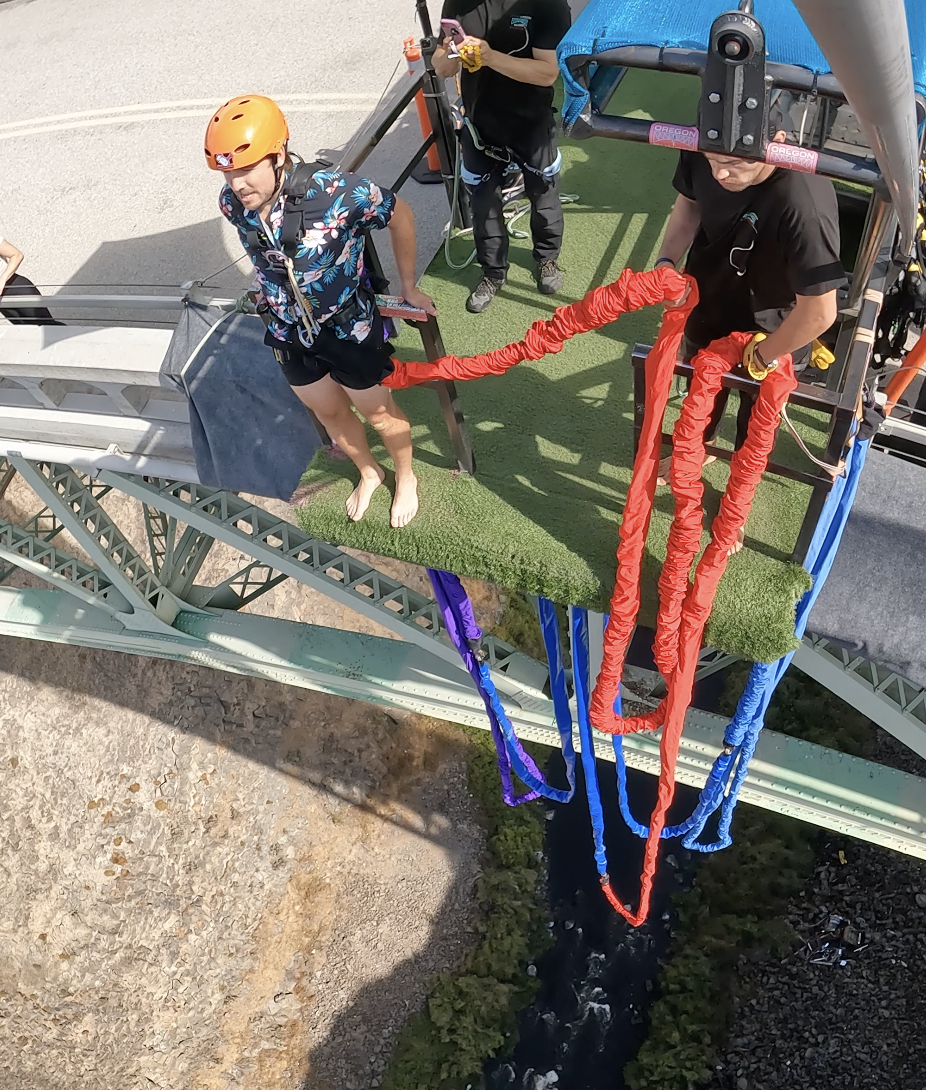
Last year, I bungee jumped for the first time, and I really appreciated our guide’s speech as we were getting ready to jump. He said he had jumped nearly 600 times, and that he was scared every time. He told us that if someone were to ever say that eventually the fear goes away, they’d be lying to you. Addressing the fear is the point.
All of life’s biggest moments incite hard work or fear, usually both. Committing to a person. Taking a new job. Moving somewhere you don’t know anyone. Having a kid. Getting older. None of them get easier by waiting for the fear to lift first. You go through it, and then you are someone who has gone through it. By confronting that fear, we tell ourselves that we can handle a scary moment. We begin to train our bodies to use fear to help us through.
Like with many of life’s challenges, we tend to look back and wonder why we were ever that worried in the first place. I love to read the lists of advice that older people give to their younger selves, and one item shows up more than any other. Not I wish I’d worked harder, or I wish I’d been more careful. It’s: I wish I hadn’t worried so much. I spent so much time worrying that I didn’t enjoy the moments I should have, and I didn’t take the risks I wish I’d taken.
You can do this.
Why not to fear
Everything above is a case for respecting the fear. Here’s the counterweight, because respecting a fear and being ruled by it are different things, and the data is reassuring.
We looked at 2,363 psilocybin sessions across Oregon and Colorado’s regulated programs. These are real sessions with real clients in the state-run programs. This is as close as anyone has gotten to measuring what actually happens in the real world.
Adverse events were reported in about 4% of sessions, and they were overwhelmingly mild and short-lived: nausea, some anxiety, a headache the next day. That rate is no worse than what’s seen in clinical trials.
Serious events were rare. Only five across all 2,363 sessions, or roughly 1 in 473. It’s worth knowing what they actually were, because the specifics matter more than the number. Two resulted in a call for emergency services: one for a suspected cardiac event, and one for abdominal pain that turned out to be kidney stones. There was one fall with no injuries. None of the five were clearly attributable to the psilocybin itself.
And when we asked clients afterward to rate how safe they felt during their experience, the average came back 9.5/10.
That last number is the one that stands out to me. These are people who walked in nervous, and nearly all of them walked out saying they felt safe.
None of this means the experience will be comfortable. It might not be. Some of the most valuable sessions people have are the hardest ones, and any good facilitator will tell you the same. What the data tells us is simpler and more useful than don’t worry.
This is not physically dangerous. You will not be alone. The medicine is tested, your facilitator is licensed, and someone trained is required to be with you for the entire session.
What I actually tell people
Your fear isn’t a warning sign telling you to stop. It’s your mind recognizing that something significant is about to happen. That’s not a reason to wait until you don’t feel any fear. That day won’t come. Instead, being well-prepared for a journey means understanding that fear, getting your questions answered, and feeling ready for the next step.
The bungee jump guy? He’d jumped six hundred times. He was scared every time. He jumped anyway, and that was the lesson.
Feeling ready to take the jump? book a free 30-minute call
Next in this series: why it costs what it costs.